
The world of architecture and interior design is ever-evolving and if there is one concept that has been growing in relevance, it’s probably biophilic design. At its core, it is about reconnecting people with nature: bringing the outdoors in, even within the most urban or enclosed environments.
Think of open spaces flooded with sunlight, seamless transitions between interior and exterior areas, and materials that echo the textures and tones of the natural world. It is a design principle rooted in well-being. But even as we create nature-inspired spaces, there’s one essential factor we can’t afford to overlook: safety.
And this is where fire rated glass doors come into play.
They are not just functional safety solutions. They’re a quiet but powerful tool that supports visual, sensory and emotional goals of biophilic design. Let’s unpack how.
Biophilic design: A quick refresh
The word “biophilic” comes from biophilia, which literally means “love of life.” It’s the idea that humans are inherently drawn to nature and natural elements, and that when we’re surrounded by those elements, we thrive.
In practice, biophilic design looks like spaces filled with daylight, airflow, greenery, natural textures and views to the outdoors. It enhances our mental clarity, reduces stress, and boosts productivity. No wonder it’s becoming a staple in modern architecture.
But as with any design trend, integrating biophilic principles into real buildings comes with practical considerations. Fire safety, for instance, is non-negotiable. Fortunately, modern solutions like fire rated glass doors mean we no longer have to sacrifice safety for serenity.
Why fire rated glass doors matter in nature-inspired spaces
At first glance, fire rated glass might not seem like an obvious fit for biophilic interiors. It’s engineered, it’s technical and it’s built to withstand extreme heat. But that’s exactly what makes it so valuable. It provides protection without disruption.
In biophilic spaces, visual flow and sensory comfort are key. Traditional fire doors, usually heavy, opaque and industrial, can interrupt the very qualities that make a space feel open and nature-connected.
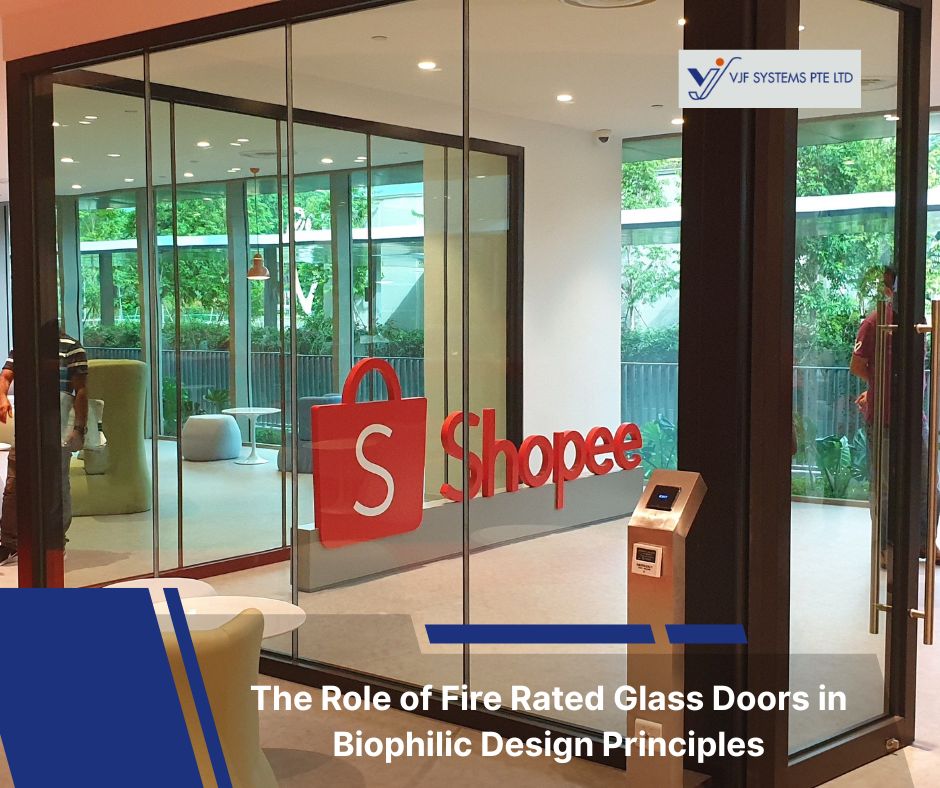
Fire rated glass doors offer a different experience. They let natural light stream through, preserve sightlines and allow for flexible spatial divisions, all while complying with the most stringent fire codes. In short, they protect people without cutting them off from the environment around them.
Light as a vital element
Light plays a major role in biophilic design. It supports our circadian rhythms, lifts our mood, and makes spaces feel expansive and alive. It’s not just about brightness. It’s about the quality and direction of light.
Fire rated glass doors help maximise natural light in interiors, especially in areas where solid partitions or traditional doors would otherwise block it. Because they’re transparent, they extend the reach of daylight, making even deep interior spaces feel more connected to the outdoors.
More importantly, they do so without compromising fire safety. You get the openness and luminosity of glass, with the certified performance of a fire-resistant barrier.
Visual transparency and continuity
One of the cornerstones of biophilic design is visual connection. This is the ability to see through to other spaces, outdoor views or elements like plants, wood and water features. This provides a sense of calm and orientation.
Fire rated glass doors support that connection. They remove visual obstacles, allowing people to maintain a sense of flow throughout a space. Whether installed in homes, workplaces or public buildings, these doors help prevent the boxed-in feeling that can happen with solid fire-rated walls.
Instead of feeling closed off, the environment feels layered, dynamic, and alive, just like nature itself.
Framing the outdoors from indoors
When we can’t physically be outside, the next best thing is being able to see it, feel it, and sense it from within. Fire rated glass doors help frame these visual connections to nature. They can serve as beautiful transitions to outdoor courtyards, terraces, or gardens, giving occupants a real-time connection to weather, greenery, and seasonal changes.
This transparency also supports spatial awareness—a key feature in nature-based design. When we understand the layout of our surroundings and can perceive space as continuous rather than segmented, we feel more grounded and relaxed.
Material harmony with natural surroundings
While fire rated glass itself is a high-performance product, its minimalist appearance means it blends beautifully with other biophilic materials. Whether you’re designing with timber, stone, rattan or earth-toned surfaces, fire rated glass doors complement rather than compete.
The frames can be customised to match natural colour palettes, and the glass itself acts like a neutral canvas that reflects and amplifies the surrounding design. Instead of becoming a visual focal point, the door quietly reinforces the design narrative.
And that’s exactly what you want in a nature-inspired space, materials that support the experience without demanding attention.
Acoustic and thermal comfort
Biophilic design isn’t just about what you see. It’s about how a space feels and functions on a sensory level. That includes temperature and sound.
Fire rated glass doors often come with enhanced acoustic and thermal insulation, making them ideal for maintaining quiet, comfortable interiors. They can help separate zones without interrupting the flow of light or views which is especially useful in shared or multipurpose spaces.
In a biophilic setting, where serenity is part of the goal, this kind of performance is essential. You get peace and quiet, wrapped in safety and bathed in light.
Safety that doesn’t steal the spotlight
One of the biggest challenges in biophilic design is balancing the natural feel of a space with the demands of the built environment. Fire codes, accessibility standards, and durability requirements are all necessary, but they shouldn’t dictate the visual tone of the space.
Fire rated glass doors solve this tension beautifully. They check every safety box, including fire resistance, smoke control, integrity, without screaming “I’m a safety feature!”
In fact, most occupants won’t even notice they’re fire-rated at all. And that’s the point. In a biophilic space, the best safety elements are the ones you don’t feel. Until, of course, you need them.
Designing for well-being without compromise
More than ever, we’re designing spaces with human well-being at the centre. From homes and offices to hospitality and healthcare, people want spaces that feel nurturing, energising and connected to something bigger than themselves.
Biophilic design delivers on that promise. And fire rated glass doors help make it possible, practical and compliant.
By embracing this material, designers and architects can achieve:
- Visually open environments that still meet fire safety codes
- Daylight-rich interiors that reduce energy use and enhance comfort.
- Flexible layouts that support both privacy and connection
- Natural design narratives that don’t get interrupted by bulky fire features
It is not about making trade-offs. It’s about making smart choices.
The future of fire safety in biophilic design
As we move toward more sustainable and people-focused architecture, biophilic principles are going to play a larger role in how we shape our environments. And with that shift comes the need for design solutions that are just as smart and sensitive as the spaces we envision.
Fire rated glass doors represent a quiet evolution in building materials, merging engineering with empathy, safety with beauty. They give designers the freedom to explore, experiment and push boundaries without losing sight of what matters most: the people who use the space.
In the end, it’s about designing environments that feel good, function well, and keep us safe all at once. And fire rated glass doors fit right into that vision.