
When it comes to building safety, few things are as critical as a clear, reliable escape route. Emergency exit pathways aren’t just lines on a floor plan, they’re the difference between order and chaos when disaster strikes. And within those pathways, one element is becoming increasingly important: fire-rated glass doors.
They don’t just sit there looking modern and polished. They serve as powerful safety tools that work hand in hand with your exit strategy, helping control fire, smoke and visibility while guiding people to safety.
Let’s explore how fire rated glass doors and emergency exit pathways complement each other and why this partnership matters more than ever in today’s building designs.
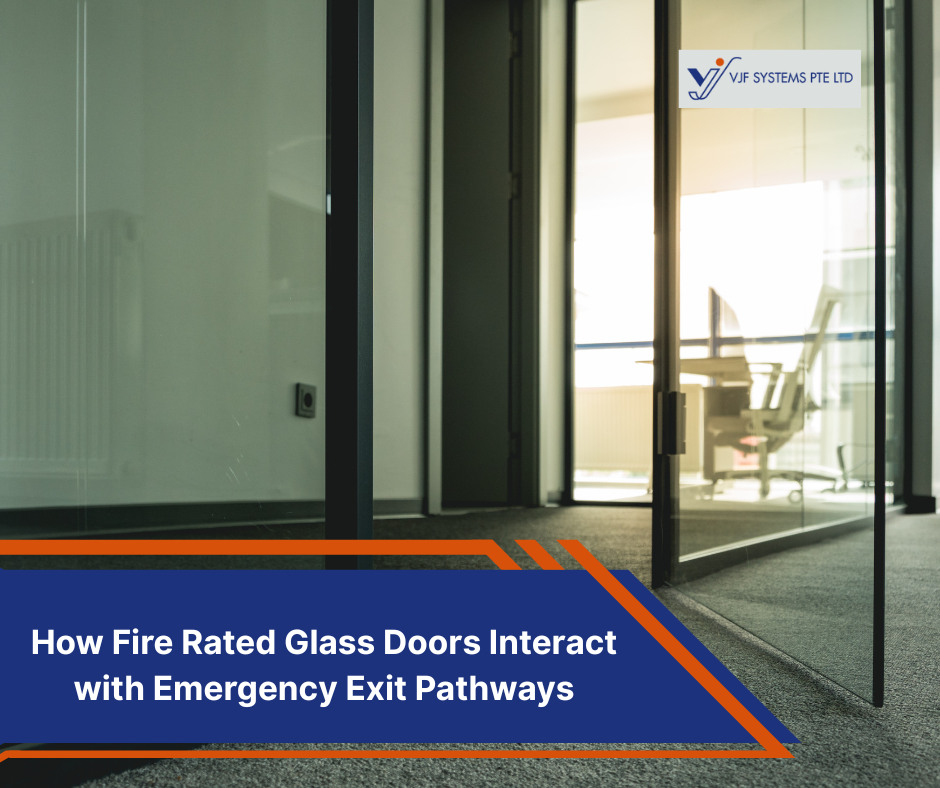
The basics: What are fire rated glass doors?
Before we dive into the interaction part, let’s clear the basics.
Fire rated glass doors are specially engineered doors fitted with glazing that can withstand fire, heat and smoke for a specified duration—typically 30, 60, or even 120 minutes, depending on code requirements.
Unlike standard glass, fire rated versions maintain structural integrity and help compartmentalize fire zones. This containment slows down fire spread, allowing building occupants to exit safely and giving first responders more time to act.
What’s impressive is that these doors provide this protection without blocking visibility. That’s a big deal in emergency situations, especially when panic and confusion can cloud judgment.
Why emergency exit pathways need strategic design
An emergency exit pathway isn’t just a random hallway or stairwell but a carefully planned route designed to lead occupants from any point in the building to a safe exit.
These routes are governed by strict building codes, covering aspects such as width, signage, lighting and fire separation. The goal is simple: ensure that everyone can get out quickly and safely when time is critical.
But here’s the challenge: modern spaces often prioritise open-plan layouts with lots of glass. That creates a unique safety question: how do you maintain open visibility without compromising fire containment?
Enter fire rated glass doors: the bridge between design and safety.
How fire rated glass doors support safe evacuation
The best way to understand the relationship between fire rated glass doors and emergency exit pathways is to look at what happens during an actual emergency.
When fire breaks out, the immediate priorities are:
- Contain the flames and smoke.
- Keep exit paths visible and accessible.
- Guide people out safely.
Fire rated glass doors play a role in all three.
Containment
These doors act as fire barriers, preventing flames from spreading into escape routes. Their fire-resistance rating ensures that even under high heat, they hold firm long enough for occupants to evacuate.
Visibility
Because the glass remains transparent under normal conditions, it allows people to see exit signs, doors and safe zones even from a distance. That clarity can reduce panic and confusion — especially in smoke-filled environments.
Access Control
In many cases, these doors integrate with panic bars, automatic closers, or fire alarms, ensuring they shut when needed while still allowing easy passage out of the building.
It’s protection and accessibility rolled into one system and that’s exactly what emergency exits need.
The role of compartmentalisation
A major part of fire safety planning is compartmentalisation, or dividing a building into sections that can resist fire for a set period.
This strategy slows the spread of flames and smoke, and gives occupants more time to reach exits. Fire rated glass doors are a key component in these compartments because they create physical barriers that still allow visibility and light.
Instead of opaque walls or heavy steel doors, architects can use glass to maintain open sightlines while still meeting fire safety codes. This means emergency personnel can also see what’s happening beyond each section without having to open a potentially dangerous barrier.
That kind of visibility can be lifesaving.
Clear pathways, clear decisions
During emergencies, visibility is everything.
When hallways or exit corridors are blocked off by solid doors or heavy partitions, people may hesitate or make wrong turns. Fire rated glass doors eliminate that confusion by giving occupants a clear line of sight toward exits.
Psychologically, that transparency reduces stress and panic. People can see where they need to go and that simple visual reassurance can make evacuations faster and safer.
So while it might sound like a small design choice, visibility through fire rated glass doors and emergency exit pathways actually plays a huge role in human behaviour during emergencies.
Safety without sacrificing style
Traditionally, fire protection meant solid steel doors and bulky barriers—functional but not exactly welcoming. But in today’s design-forward spaces, safety can’t come at the cost of aesthetics.
Fire rated glass doors allow architects and interior designers to maintain a sleek, modern look without breaking compliance. They blend seamlessly into both commercial and residential projects while still meeting the toughest fire codes.
That means you can have bright, open corridors that look beautiful on a normal day and stay safe when things go wrong. It’s the kind of synergy that modern buildings demand: form meeting function, design meeting safety.
Integration with building systems
Today’s smart buildings are interconnected ecosystems. Fire rated glass doors often link to alarm systems, access control and automated fire dampers.
When an alarm is triggered, these doors can automatically close to block off danger zones while ensuring that emergency exits remain usable. Some systems also integrate with smoke control and HVAC, directing air flow away from evacuation routes.
This kind of automation transforms fire doors from passive barriers into active safety partners.
Instead of just standing by, they respond intelligently, guiding people to safety while minimizing damage and confusion.
Building code compliance and confidence
Safety isn’t just about technology but also about accountability. Building codes in most regions now require specific fire resistance ratings for exit routes and adjacent spaces.
Using fire rated glass doors and emergency exit pathways that meet or exceed these requirements helps ensure compliance with local regulations and international standards like BS, EN, or UL ratings.
Beyond compliance, it also builds trust. Occupants feel safer knowing that every design decision, even the transparent ones, was made with their protection in mind.
Maintenance and reliability over time
One often overlooked part of fire safety is maintenance. Even the best systems need periodic checks to ensure they work as intended. Fire rated glass doors are relatively low maintenance, but regular inspections are still key.
Checking seals, hardware, and closing mechanisms ensures that doors perform perfectly under stress. After all, when the unexpected happens, there’s no second chance for a malfunction.
Routine care doesn’t just meet code but it also sustains long-term reliability, giving building owners confidence that their emergency systems will always be ready.
Designing safer, smarter pathways forward
As buildings get smarter, taller, and more complex, so must the materials and systems that protect them. The interaction between fire rated glass doors and emergency exit pathways is a perfect example of that evolution.
We’re seeing a shift from bulky fire protection toward solutions that combine transparency, technology and trust. These glass systems empower architects to design spaces that feel open yet stay protected; where safety doesn’t mean compromise and every decision supports resilience.
So the next time you walk through a bright, glass-lined corridor, know that beauty and safety might be working hand in hand, quietly safeguarding every step you take.