
When people think about fire rated glass, safety is usually the first thing that comes to mind. It’s a material trusted to contain flames, protect lives and meet rigorous building codes. But beyond its technical role, fire rated glass is also changing how we think about space in interior design. Architects and designers are increasingly recognising that this material doesn’t just serve a protective function but also shapes how we experience rooms, light and overall flow within a building.
The beauty of fire rated glass lies in its ability to offer safety while influencing the way spaces feel. From the way light filters through to the sense of openness it creates, fire rated glass is quietly redefining modern interiors. Let’s explore how it impacts spatial perception and why it’s becoming a go-to material for spaces that value both aesthetics and safety.
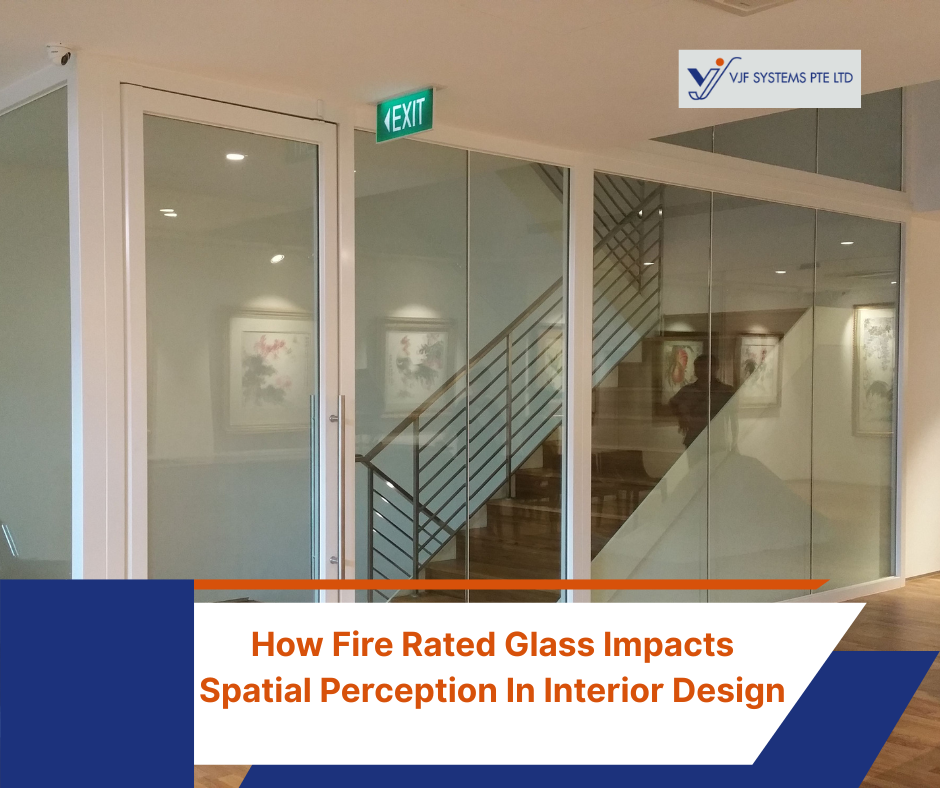
Safety meets design freedom
Traditionally, fire safety features were seen as barriers to design creativity. Solid partitions and heavy doors were necessary, but they often made interiors feel enclosed or disconnected. Fire rated glass changes that narrative. Because it combines fire resistance with transparency, designers can maintain compliance without losing the sense of openness.
This balance between safety and design freedom influences spatial perception in powerful ways. Instead of experiencing a space as segmented or compartmentalised, occupants can enjoy visual connections that stretch across different zones. It gives interiors a continuity that feels natural and flowing, even in settings that must prioritize strict fire safety measures.
The role of transparency in shaping experience
Transparency is one of the strongest tools designers use to manipulate spatial perception. Fire rated glass offers exactly that. By allowing unobstructed views, it reduces the visual weight of barriers and makes spaces feel larger and more connected.
This doesn’t just affect how a space looks but it also shapes how people move through it. Transparency encourages exploration and interaction, because people can see what lies beyond without obstruction. It breaks down psychological barriers created by solid partitions and enhances the fluidity of movement within a building.
Light as a design element
Light is one of the most important elements in interior design, and fire rated glass plays a critical role in amplifying it. Instead of blocking natural or artificial light, fire rated glass lets it flow freely across different areas. This has a direct effect on spatial perception, making interiors feel brighter, more expansive and more welcoming.
In design, brightness is often associated with openness. When light moves seamlessly across zones, the boundaries between them feel softer. Rooms that might otherwise appear compact gain a sense of depth and dimension, which changes the way occupants experience scale. In many cases, light can be the difference between a space that feels closed in and one that feels limitless and fire rated glass helps achieve this effect while staying compliant with safety standards.
Defining zones without heavy barriers
Modern design often leans towards open layouts, but complete openness isn’t always practical. Fire rated glass offers a middle ground by allowing designers to define zones without introducing heavy, opaque barriers. The material maintains visibility while still providing necessary compartmentation for fire safety.
This creates subtle transitions rather than abrupt divisions. Occupants still recognise that different zones exist, but the lack of solid obstructions allows them to perceive the entire space as part of a cohesive whole. It’s an approach that preserves intimacy where needed while sustaining a larger sense of connection.
Balancing privacy and openness
A common challenge in interior design is achieving the right mix of privacy and openness. Fire rated glass contributes to this balance by maintaining safety and transparency without overwhelming the space. Depending on the finish, it can range from fully clear to partially obscured, giving designers options for how much visibility to allow.
This flexibility allows interiors to feel connected while still addressing the need for privacy in certain zones. The material adapts to different functions without compromising spatial perception, making rooms feel layered rather than boxed in.
Creating continuity in vertical and horizontal spaces
Fire rated glass doesn’t just change how we experience rooms side by side, it also impacts how we perceive vertical and horizontal continuity in a building. Transparent barriers allow sightlines to extend beyond immediate surroundings, making interiors feel more expansive both across floors and between zones.
This plays into the psychology of spatial perception. Humans naturally associate openness with comfort and security, while enclosed environments can sometimes feel restrictive. Fire rated glass enhances comfort by opening up sightlines without reducing the sense of protection.
A modern aesthetic with practical value
A sleek and modern appearance of fire rated glass fits seamlessly into contemporary interior design trends. Its clean lines and reflective qualities contribute to an aesthetic of sophistication and minimalism, all while carrying essential functional purpose.
The perception of space isn’t only about physical dimensions. It is also influenced by style. Materials that feel modern and refined tend to elevate how occupants interpret the space as a whole. Fire rated glass delivers this perception while ensuring safety compliance, making it a unique design tool that bridges practicality with style.
Psychological impact of partial perception
The spaces we inhabit affect our moods, productivity and overall well-being. When a space feels open, bright and connected, people tend to feel more relaxed and engaged. Fire rated glass contributes to this effect by enhancing visual comfort, allowing natural light and reducing the feeling of confinement.
The result is not just an environment that looks good on paper. It’s one that positively influences the people who use it. By shaping how occupants perceive space, fire rated glass directly impacts their experience of safety, comfort and design harmony.
Future directions in design with fire rated glass
As interior design evolves, materials that blend safety with aesthetic flexibility will only grow in demand. Fire rated glass is already shaping the way designers think about openness, light and transitions, and its role will continue to expand. Advances in manufacturing are making it possible to produce glass that meets higher performance standards while offering even more design versatility.
For designers, this means greater freedom to explore creative solutions that don’t compromise on safety. For occupants, it means living and working in spaces that feel open, connected and comfortable while remaining protected.