
The conversation does not stop at safety when it comes to choosing fire rated glass. Yes, performance and compliance are always non-negotiable, but aesthetics and functionality are just as important as modern spaces. Two of the most popular options, frosted and clear fire rated glass, may look similar at first glance, but they serve very different purposes depending on the environment you’re designing for.
So how do you decide between them? Let’s take a closer look at what sets them apart and when each option shines.
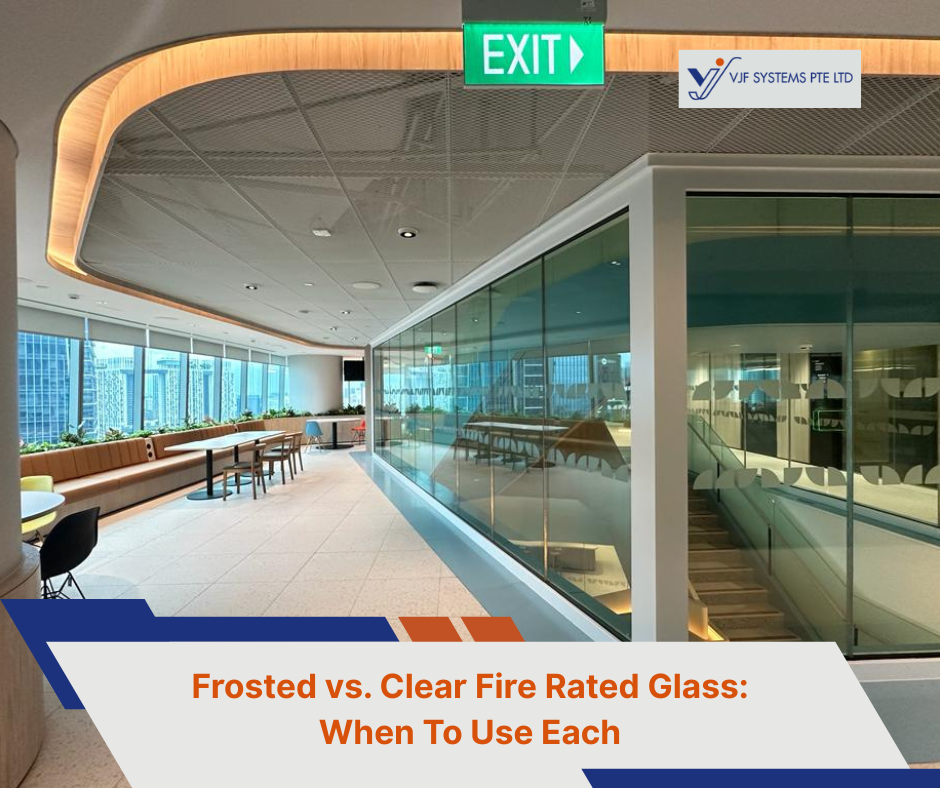
The shared foundation: Fire safety first
Whether frosted or clear, both types of fire rated glass are engineered to withstand high temperatures and help contain flames and smoke. Their primary role is to buy precious time, giving occupants a safer chance to evacuate while helping to protect property.
Both options go through rigorous testing to meet local building codes and performance requirements. That means whichever one you choose, you’re not compromising on safety. The real decision lies in the secondary factors: visibility, privacy, light diffusion and how they align with the overall design vision of your space.
Clear fire rated glass: Transparency with purpose
Clear fire rated glass is often the go-to choice when visibility matters most. It allows natural light to travel freely, creating a sense of openness and connection between spaces. Designers and architects often lean toward clear glass when the goal is to highlight brightness, flow, and transparency.
Choosing clear fire rated glass means:
- Spaces feel larger and more welcoming because there’s no visual barrier.
- Daylight can penetrate deeper into a building, reducing the need for artificial lighting.
- It maintains a clean, modern aesthetic without drawing too much attention to self.
But while it offers visibility and openness, clear fire rated glass doesn’t provide privacy. If discretion or confidentiality is a priority, you may need to consider another option or explore ways to combine it with other design elements.
Frosted fire rated glass: Privacy meets safety
Frosted fire rated glass offers all the same fire-resistance benefits but adds another layer: visual obscurity. Its surface treatment scatters light, blurring what’s behind it while still allowing brightness to filter through.
This makes frosted glass especially useful when the priority is balancing safety with privacy. It allows designers to maintain a sense of openness and light while shielding spaces from full visibility.
With frosted fire rated glass:
- Light still flows naturally, but occupants don’t feel like they’re on display.
- Spaces gain a sense of separation without feeling closed off.
- It softens the aesthetic, adding texture and visual interest compared to a plain, clear surface.
The result is a material that supports both safety and comfort, particularly in environments where discretion matters.
Light, mood and atmosphere
One of the most interesting differences between clear and frosted fire rated glass is how they influence mood.
Clear fire rated glass keeps spaces bright and airy, emphasising openness. It encourages interaction and sightlines, making rooms feel connected and cohesive.
Frosted fire rated glass, on the other hand, creates a softer, more diffused light. The blurred effect reduces glare and harshness, resulting in a calmer and more tranquil environment. Designers often use this to cultivate atmosphere whether it’s quiet sophistication or simply a break from the starkness of total transparency.
Ultimately, your choice here isn’t just about safety or privacy but also about how you want people to feel when they step into space.
Practical considerations
Beyond mood and aesthetics, there are practical factors that influence whether frosted or clear fire rated glass is the right choice.
- Visibility vs. privacy: Clear glass provides unobstructed sightlines, while frosted ensures discretion without blocking light.
- Lighting needs: Both allow daylight to pass through, but frosted diffuses it, creating a softer effect.
- Maintenance: Clear glass shows smudges and fingerprints more easily, while frosted can disguise minor marks.
- Design intent: Clear complements minimalist, modern environments, while frosted adds texture and visual depth.
The right choice depends on what matters most in the context of the space.
Matching the glass into the space
The decision between frosted and clear fire rated glass ultimately comes down to purpose. What is the function of the room? How do you want people to experience it?
- Clear fire rated glass works best in spaces where openness, flow and visibility are top priorities. It keeps people connected and helps natural light reach further.
- Frosted fire rated glass is the stronger option when privacy or discretion is equally important as safety. It provides separation without sacrificing brightness.
Think of it less as one being “better” than the other and more about choosing the right tool for the job.
Designing balance: Combining both
Sometimes, the answer isn’t just frosted or clear – it’s both. Many projects benefit from a mix of glass types depending on the functional needs of each area. For example, open circulation areas may call for clear glass, while more private rooms benefit from frosted.
Blending the two can create a dynamic, layered design where safety, functionality and atmosphere all work together.
Future-proofing with fire rated glass
Fire rated glass is not just about present-day requirements but also an investment in long-term building performance. Spaces evolve, and so do the needs of the people who use them.
By selecting the right balance between frosted and clear glass, you’re ensuring that your design remains flexible. Clear glass can support open, collaborative areas today, while frosted options provide adaptable privacy should layouts or functions shift in the future.
In this sense, the choice is not only about current design intent but also about building resilience for years to come.
It all comes down to your preference and needs!
Fire rated glass is one of those building materials where safety and design can truly complement each other. Once you know both frosted and clear options provide reliable protection, the choice becomes about how you want the space to feel and function.
If your goal is openness, brightness, and a sense of connection, clear fire-rated glass is the way to go. If privacy, softness, and atmosphere matter just as much, frosted fire-rated glass brings that balance.
The beauty of modern fire rated glass is that you don’t have to compromise. Both options allow you to meet stringent safety standards while still tailoring the look and experience of your space to your vision.