
If you’re a building owner, facilities manager, or someone who just likes keeping things in one piece (literally and legally), then already know so many things about fire safety requirements. And as you should, because it’s a big part of why property compliance feels like a never-ending group project. One detail that keeps popping up in conversations is how fire rated glass doors reduce liability risks for building owners, and it’s for good reason.
Fire rated glass doors used to be the quiet, unassuming safety feature in buildings. These days however, they’ve evolved into a legit powerhouse: sleek, modern-looking and crucial for both protection and compliance. In a world that’s increasingly litigious and regulation-heavy, the last thing anyone wants is to be held responsible for something that could’ve easily been prevented. So let’s talk about why these doors matter, how they function and why they’re basically your risk-management besties.
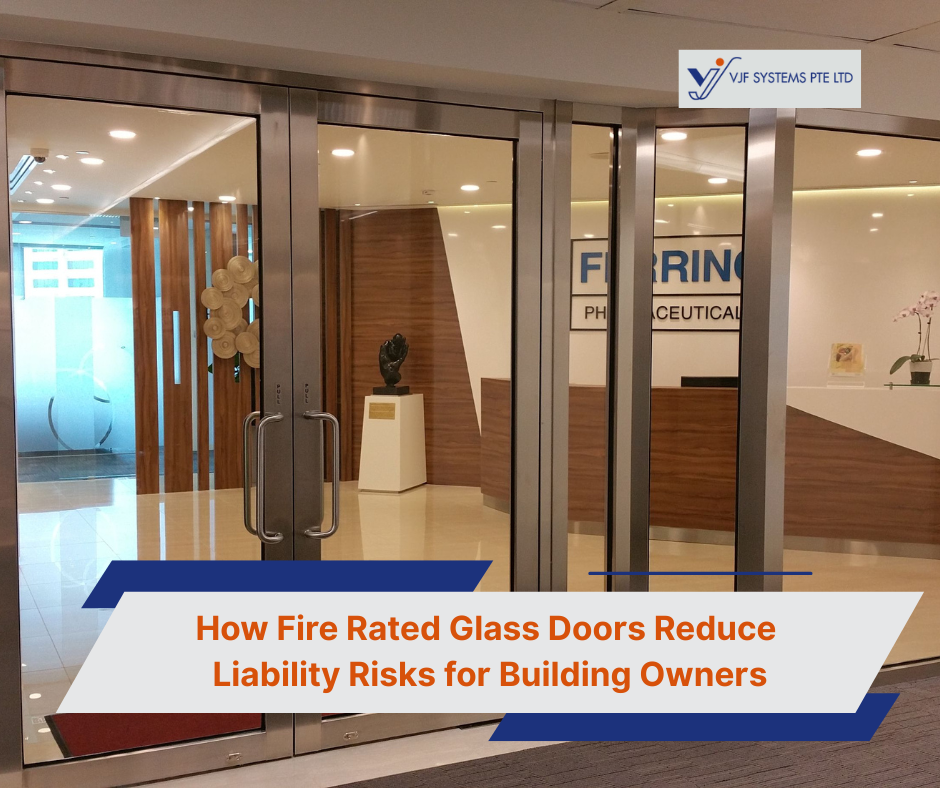
Fire safety isn’t optional—it’s the law (and liability-proofing by design)
One of the biggest realities of managing a property is that you’re dealing with laws, codes, and regulations that don’t care whether you’re having a good day. Fire safety codes, in particular, have zero chill. They expect compliance at all times and not meeting them opens the door (no pun intended) to legal problems you absolutely don’t want.
This is where fire rated glass doors quietly rise to the occasion. They’re designed to meet strict performance and safety standards, exactly the kind that protect you from being held liable if something goes wrong. Understanding how fire rated glass doors reduce liability risks for building owners starts with understanding compliance. When your fire doors are certified and properly installed, you’re essentially showing regulatory bodies that you’ve done your due diligence. And in the world of liability, due diligence is like your first line of defence.
Fire rated glass doors help compartmentalise a building, manage smoke movement and slow down fire spread. Sure, that sounds technical, but what it really means is: when the door works as intended, you avoid chaos, both physically and legally. If an incident happens and regulators start investigating, showing that you invested in properly rated doors helps prove that you didn’t cut corners. Your choices were intentional. And in risk management, intention matters.
Visibility that protects people and reduces exposure
Traditional fire doors can sometimes make a space feel closed off. They’re bulky, opaque and block sightlines, which occasionally causes safety hazards of their own. Fire rated glass doors, on the other hand, keep areas visually open. This clearly isn’t just an aesthetic win but a practical one.
When people inside a building can see what’s happening beyond a closed door—smoke, movement, evacuation routes—it reduces confusion. And in emergency situations, confusion is the enemy. Clear sightlines help occupants make faster, safer decisions, which lowers the likelihood of harm. This is another piece of how fire rated glass doors reduce liability risks for building owners.
Think of it this way: anything that helps people move more safely through the environment reduces the chances of accidents. And those accidents—falls, delays during evacuation, poor wayfinding—are the types of incidents that turn into claims and legal exposure. So keeping spaces visible doesn’t just feel modern but also feels responsible.
Containing fire and smoke: A direct line to lower liability
Let’s get into the heart of why fire rated doors exist in the first place: containment. Fire is unpredictable, not a vibe any building owner wants to gamble with. But the whole design of fire rated glass doors hinges on stopping fire and smoke from traveling too quickly. And if you’ve ever looked at the fine print of liability cases, you’ll notice something interesting: most lawsuits around building fires are tied to how quickly conditions escalated.
By keeping fire and smoke compartmentalised, these doors slow everything down. Slower spread means more time for evacuation. More time for responders. More time before structural damage becomes catastrophic. And the more “time” you create, the lower your liability exposure becomes.
This is one of the most direct explanations of how fire rated glass doors reduce liability risks for building owners, because mitigation is baked into the product itself. The technology used in the glass, framing and sealing systems all work together to delay heat transfer and keep toxicity levels controlled. That delay is a protective buffer, both for people and for your legal position.
Boosting accessibility and safety without compromise
Building owners today aren’t just thinking about safety. Instead they’re balancing safety with user experience, aesthetics and inclusivity. The good thing about fire rated glass doors is that they don’t force you to choose between safety and style or safety and function. They cover both.
Many models comply easily with accessibility guidelines. They’re often lighter to operate, easier to see through and better for users with mobility limitations. Enhanced accessibility also has a huge role in reducing liability, because the moment a space is difficult to navigate for certain groups of people, your legal exposure spikes. Imagine someone tripping or getting trapped because a door wasn’t visible or easy to use—that’s the type of situation these doors help prevent.
By choosing materials and designs that align with universal accessibility principles, you strengthen your case for having a safe, well-thought-out building.
Better durability, fewer problems, lower long-term risk
Another thing property owners understand very well: the maintenance struggle. Anything that breaks often becomes a liability risk. Doors that jam, warp, fail to self-close, or lose their protective qualities are basically lawsuits waiting to happen.
Fire rated glass doors, when maintained correctly, offer durability that translates to reliability. They’re engineered to withstand stress, impact, and everyday use without losing their fire protection capabilities. That kind of consistency is important because one of the first questions that comes up in investigations is whether equipment or structural components failed.
When your fire rated doors are up to standard and maintained, you’re essentially preventing small operational issues from snowballing into legal exposure. And because they require less frequent repairs or replacements compared to older door types, your risk stays low long-term—not just during an inspection cycle.
The subtle but important impact on property value
Liability risk is also more than just about avoiding lawsuits; it also ties into long-term asset value. Buildings with strong fire protection systems, including updated fire rated glass doors, often enjoy better valuation over time. Regulatory compliance reduces insurance premiums and safer spaces tend to be more attractive to tenants and buyers.
Investors and stakeholders also look for signals of responsible ownership. Enhanced fire protection is exactly that kind of signal. When they see it, they feel reassured that the property is thoughtfully managed, future-proofed, and less likely to encounter high-risk incidents.
The bigger picture: Peace of mind and stronger culture
At the end of the day, having fire rated glass doors isn’t just about checking a box or passing an audit. It’s about building a culture of risk awareness and responsibility. When you invest in fire rated components, you’re creating an environment where safety doesn’t feel like an afterthought.
People notice when buildings feel secure. They trust you more. And trust, in the world of property management, plays into everything: tenant satisfaction, brand reputation, occupancy rates, and even crisis response. Fire rated glass doors reinforce trust because they’re both visibly protective and functionally reliable.
Ultimately, reducing liability risks for building owners through fire rated glass is a combination of compliance, design, visibility, protection, durability and user experience. Each of those elements chips away at your risk exposure, giving you more peace of mind and more control over your property’s safety landscape.