
When we talk about fire safety in buildings, most people picture alarms, sprinklers, extinguishers, and emergency exits. But one often-overlooked hero in the world of passive fire protection? Intumescent interlayers in fire rated glass.
Sure, glass might not be the first material you associate with fire resistance. Historically, it’s been seen as fragile and easily compromised. Yet thanks to modern materials and engineering, fire rated glass has become a key player in keeping buildings safer. And at the heart of that performance is a special component: the intumescent interlayer.
Let’s break down what that means, why it matters, and how it enhances safety in real-world environments without making this sound like a technical manual.
What exactly is an intumescent interlayer?
The star of the show here is the intumescent interlayer—a heat-reactive layer sandwiched between panes of fire rated glass. In normal conditions, it’s clear and nearly invisible. But when exposed to heat, it swells, forms an insulating barrier and helps prevent fire and smoke from spreading to the other side.
Think of it like a superhero layer that springs into action when danger appears. It stays cool until it’s needed, then activates and protects the space quietly doing its job while maintaining the clean, modern look we expect from architectural glass solutions.
This is what makes intumescent interlayers in fire rated glass such a critical innovation. We get transparency, natural light, and visual openness, without sacrificing safety or performance.
Why more buildings are choosing fire rated glass
Modern spaces are shifting away from closed-off layouts and heavy materials. Whether it’s offices, retail spaces, hospitality environments, or upscale residences, most designers and owners now prefer bright, open interiors with plenty of natural light.
But big open spaces and lots of glass don’t naturally mix well with fire safety unless you choose materials designed to handle heat, flames and smoke.
That’s where fire rated glass with intumescent interlayers enters the story. Instead of picking between safety and aesthetics, architects get both:
- Clear sightlines for monitoring safety and movement
- Daylight and aesthetic transparency
- Fire-resistant performance without bulky barriers
We get safer buildings AND beautiful spaces. A win-win.
How the intumescent layer works during a fire
Here’s what happens step-by-step but still in simple language.
Stage 1: Calm & Clear
Under everyday conditions, the interlayer is transparent and unnoticeable. People go about their day without even knowing it’s there.
Stage 2: Heat Detection
The moment fire heat reaches a certain temperature threshold, typically around 120°C or higher, the interlayer begins reacting. It doesn’t need alarms or electricity to respond. It’s automatic.
Stage 3: Swelling & Insulation
The interlayer expands and transforms into a thick, opaque, foam-like shield. Not only does this block heat radiation, it also prevents flames and smoke from passing through.
Stage 4: Compartmentalisation
The activated layer helps create a fire-safe barrier, keeping the fire contained to its origin point. That means more time for evacuation, less property damage and reduced risk of rapid fire spread.
Even while the glass heats up, the interlayer stays strong and active, buying precious minutes — which can be the difference between a controlled situation and a catastrophic one.
That’s the power of intumescent interlayers in fire rated glass.
What makes intumescent technology so important?
The real strength of fire rated glazing comes from multi-layer protection. Without the interlayer, fire rated glass would lose a significant portion of its ability to stop heat transfer.
So why does this matter?
Because in a fire, heat is just as dangerous as flames. Radiant heat can ignite materials on the other side of a glass partition even if flames never touch them. The intumescent interlayer acts like a shield, blocking thermal energy and helping maintain safer temperatures.
In other words, it’s not just about stopping fire but also about slowing the temperature increase and giving occupants and responders more time.
And in safety planning, every second counts.
Seamless safety without compromising design
Fire protection used to mean bulky doors, thick walls, or steel shutters. But today, aesthetics matter, especially in premium spaces where brand, luxury, or hospitality experience comes into play.
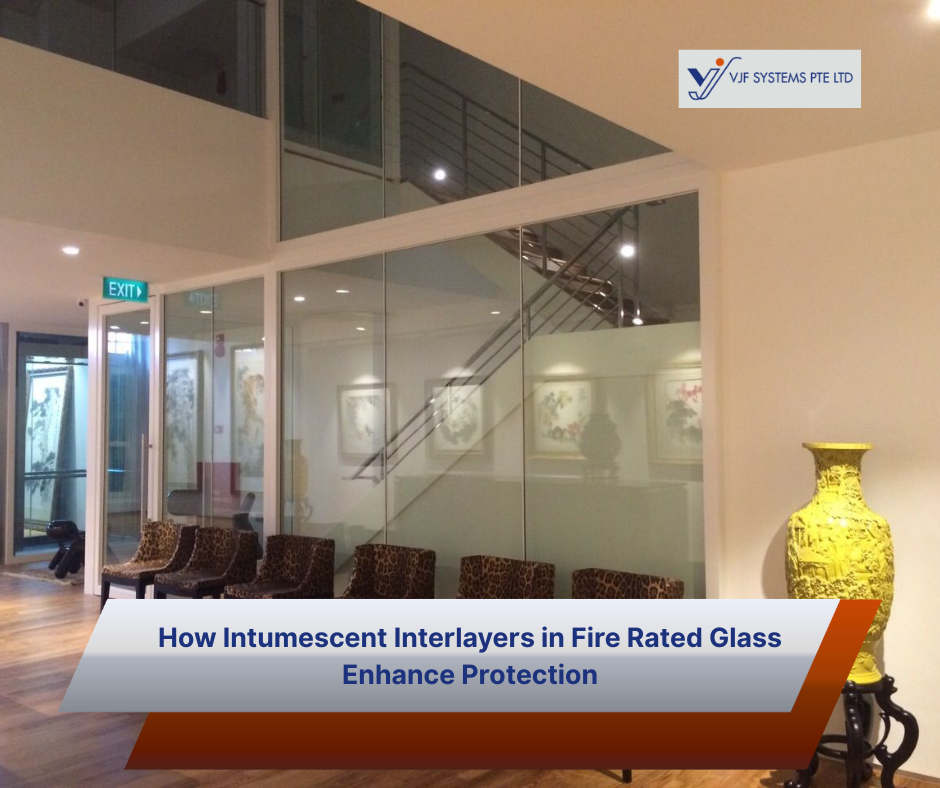
Intumescent-layer technology allows spaces to stay modern, bright and open while meeting strict safety codes. Fire rated glass now fits beautifully into:
- Corporate offices
- Retail and commercial interiors
- Hospitality environments
- Educational institutions
- Healthcare facilities
- High-end residential properties
The look stays elegant. The safety stays reliable.
This balance is why designers and engineers are increasingly leaning towards intumescent interlayers in fire rated glass when planning modern spaces.
How they support better emergency response
Beyond preventing spread, these interlayers also support better emergency response.
By keeping glass intact, visibility improves. Firefighters and safety personnel see into rooms without having to open dangerous spaces or rely purely on cameras.
That means:
- Faster assessment of fire zones
- More efficient rescue operations
- Reduced risk during entry and navigation
So while occupants are evacuating, responders are working more effectively behind the scenes — thanks in part to these glass systems doing exactly what they’re designed for.
Long-term safety and confidence
Installing fire rated glass with intumescent interlayers is a design decision as well as a long-term safety investment. Unlike some active systems that need constant maintenance or power supply, these materials are always on standby.
- They don’t wear out from inactivity.
- They don’t require activation checks.
- They’re always ready to protect when needed.
And once installed properly, they contribute to peace of mind day-in, day-out.
Bringing intumescent fire rated glass into your project
Thinking about integrating this in your space? That’s a smart move, and a future-proof one. Fire codes are evolving and more projects are now expected to mix performance with aesthetics.
Choosing glass with high-quality intumescent interlayers gives you reliability, modern styling and code-compliant safety are a solid combination for property owners, designers and facility managers alike.
When planning, make sure to collaborate with certified fire-glass specialists, understand your required fire rating period and ensure proper installation. The product can be exceptional but proper specification and execution matter too.
Choosing smarter fire safety solutions
As buildings continue to evolve, so should the materials protecting them. Intumescent interlayers in fire rated glass offer arguably one of the most elegant, modern and effective solutions available. They create a safer environment while supporting the open-space designs and natural-light concepts we’ve come to love.
If you’re reviewing fire strategy upgrades, designing a new space, or simply exploring advanced architectural safety solutions, now is the perfect time to consider upgrading to fire rated glass systems with intumescent technology.
Clear, strong, reliable and ready when it matters most.