
Sprinkles, alarms and extinguishers are just some of the usual items that come to our mind whenever the topic of fire safety in modern buildings comes up. While these items are extremely important, there is another silent guardian that’s usually overlooked: fire rated glass doors. Fire compartmentation is where these doors play a central role, making sure that if flames break out, they don’t spread unchecked. This ability to slow down fire is one of the most powerful tools in passive fire protection, making spaces not only safer but also compliant with regulations.
What is fire compartmentation
Before diving into the role of fire rated glass doors, let’s first get clear on the idea of fire compartmentation. Simply put, fire compartmentation is the method of dividing a building into separate zones or compartments using fire-resistant structures like walls, ceilings, floors, and—yes—doors.
The goal is simple: if a fire starts in one compartment, it should stay there long enough for people to evacuate safely and for emergency teams to respond. This strategy limits the spread of smoke and flames, protecting lives while reducing damage to the rest of the property.
Why fire rated glass doors are essential
Doors are natural weak points in any barrier. A wall may resist flames for hours, but if the door fails within minutes, the entire fire compartmentation strategy collapses. Fire rated glass is specially designed to withstand fire for a specific period of time, maintaining the integrity of a fire-resistant barrier.
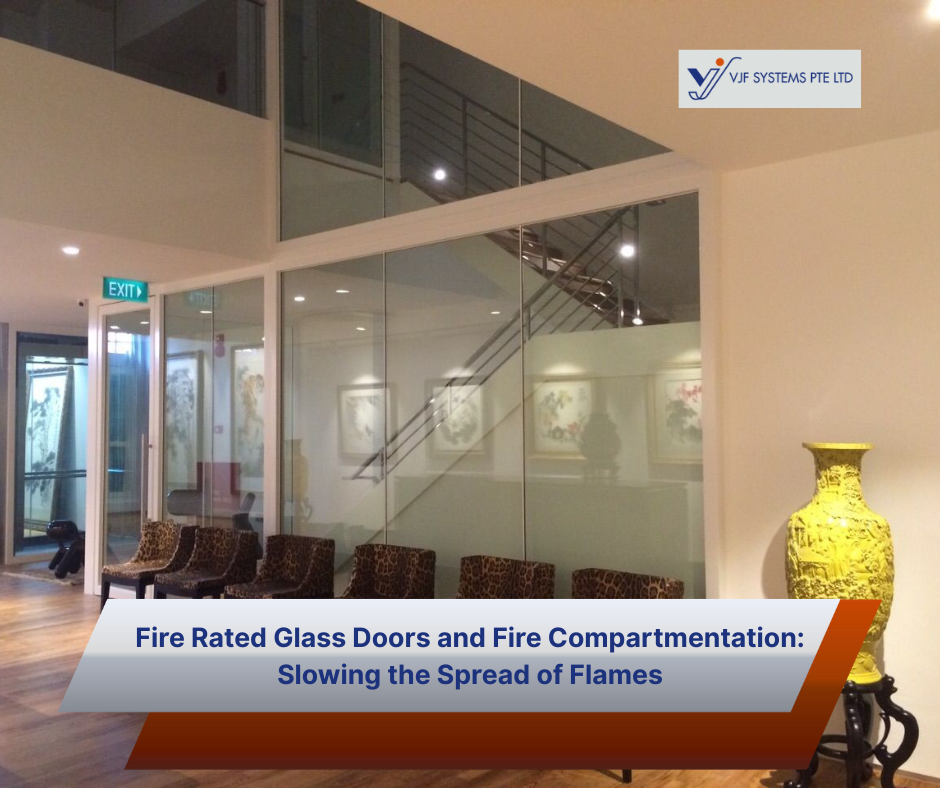
Unlike traditional solid doors, fire rated glass doors allow natural light to flow through spaces without sacrificing safety. They can contain fire and smoke while providing visibility, which helps both occupants and responders during emergencies.
By incorporating these doors into a fire compartmentation plan, buildings strike a balance between modern design and uncompromised safety.
How fire rated glass doors work
The strength of fire rated glass doors lies in the materials and engineering behind them. Their core purpose is to resist heat, flames and smoke for a set period—typically 30, 60, or even 120 minutes. This resistance buys precious time, slowing the spread of flames and giving occupants a safe window to escape.
The glass itself is not ordinary. It is manufactured to remain stable even under extreme heat, preventing it from cracking and allowing flames to burst through. Paired with fire-resistant frames, seals and hardware, the door becomes a reliable barrier that aligns with fire compartmentation strategies.
The relationship between fire rated glass doors and fire compartmentation
Here’s where things connect: fire compartmentation relies on every component working together. If one part of the system is weak, the rest is compromised. Fire rated glass doors integrate seamlessly into this setup, closing the gap where flames and smoke would otherwise escape.
Think of fire compartmentation as a chain and each link must be strong. The walls, ceilings, floors and doors all share responsibility. Fire rated glass doors ensure that visibility, aesthetics and accessibility do not come at the expense of safety. They reinforce compartments, maintain integrity and slow down fire spread effectively.
Benefits beyond compliance
It’s true that regulations require fire compartmentation measures and fire rated glass doors are often part of meeting those codes. But beyond compliance, they bring other benefits worth noting:
- Enhanced safety: They buy time for evacuation and intervention.
- Modern aesthetics: Glass contributes to brighter, more open spaces.
- Functionality: The ability to see through them aids both wayfinding and emergency response.
- Peace of mind: Knowing that doors are designed to withstand fire provides reassurance to occupants and property owners alike.
While compliance may be the baseline, these advantages make them a smart choice for future-proofing buildings.
The role of time in fire safety
One of the most critical factors in fire safety is time. Fires spread quickly. Smoke can fill a space in minutes, and flames can jump between rooms just as fast. Every additional second that a barrier holds makes a difference.
Fire rated glass doors serve as more than just entry and exit points. They are active players in slowing the timeline of fire progression. By holding back flames and smoke for their rated duration, they extend the safe period for evacuation. In the bigger picture of fire compartmentation, this delay is often the dividing line between manageable incidents and catastrophic outcomes.
Designing with fire compartmentation in mind
Integrating fire rated glass doors into a building requires thoughtful design that considers both form and function. Architects, designers and safety experts must work together to ensure that the placement of these doors supports the overall compartmentation strategy.
This means assessing escape routes, identifying fire risks and understanding how people flow through spaces. The doors must be located where they can best contain fire while still facilitating daily usability. A successful design doesn’t just keep people safe during an emergency; it also ensures comfort and convenience in everyday life.
Slowing the spread of flames
At the heart of this discussion is the simple truth: fire rated glass doors slow the spread of flames. This role may seem straightforward, but its impact is profound. By reinforcing fire compartmentation, these doors transform from passive features into active guardians.
When combined with other fire-resistant elements, they create a layered defence system that protects lives, property and business continuity. Fire may be unpredictable, but with the right barriers in place, its progression can be controlled long enough to make all the difference.
Looking ahead: Safety meets innovation
The evolution of building safety is ongoing. As materials, designs and regulations evolve, so too does the role of fire rated glass doors in fire compartmentation. The future promises doors that are even more durable, more versatile and better suited to the needs of modern architecture.
What doesn’t change, however, is their central role in slowing the spread of flames. Whether in residential, commercial or industrial spaces, these doors remain an essential part of the silent safety network that protects us when it matters most.
Choosing the right protection
Fire safety isn’t just one element alone, but a holistic system where every component contributes. Fire rated glass doors may seem like just another detail, but in the larger framework of fire compartmentation, they are indispensable.
They don’t just look good, they perform when performance matters most. And by doing so, they give time, protection and peace of mind. Slowing down the spread of flames isn’t just a technical achievement; it’s a life-saving one.