
When it comes to safety in buildings, fire rated glass doors aren’t just an optional feature – they’re a critical part of protecting lives and property. These doors aren’t only about aesthetics or design flexibility. They serve a very specific role in passive fire protection: slowing the spread of fire, smoke and heat long enough to allow safe evacuation and reduce damage.
But having a fire rated glass door installed is only half the story. The real question is this: does the door actually meet the building codes it claims to? Many property owners, developers and even some contractors assume compliance without checking. Unfortunately, that assumption can cause major problems later in, both legally and in terms of safety.
Verifying if your fire rated glass door meets building codes doesn’t need to be complicated. It comes down to understanding what to look for, what documentation is required and how to confirm the product’s certification and installation.
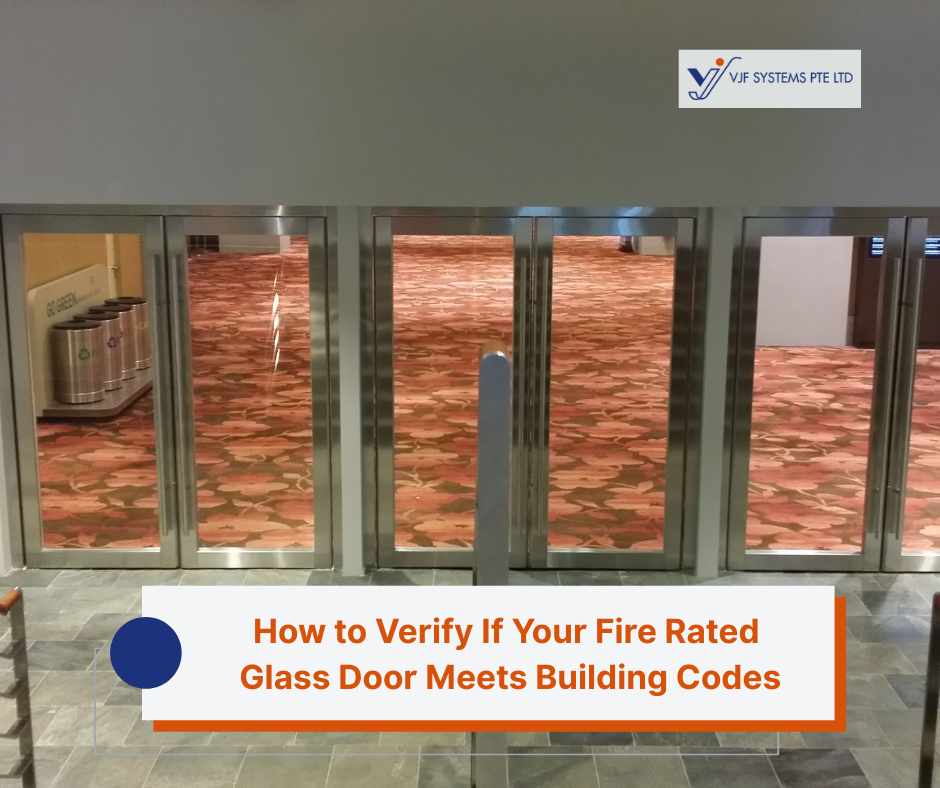
Why compliance matters
Building codes exist for a reason: they ensure that materials and structures in a property can handle real-life risks, especially during emergencies. Fire rated glass doors are designed to resist fire for a specified duration, whether that’s 30, 60, or 120 minutes. If a door is not properly certified, it might not perform as expected when a fire breaks out.
Beyond safety, there are also regulatory and financial consequences. Non-compliance can result in fines, insurance disputes, or even liability in the event of an incident. In short, verifying compliance is not only about ticking boxes, it’s about making sure your building is truly safe and legally covered.
Step 1: Check for certification labels
The first thing you’ll want to do is look for certification labels or markings on the fire rated glass door. These labels act like a seal of authenticity, proving that the door has been tested according to recognised fire standards.
The label is usually permanently fixed to the door or frame and may include details such as:
- The fire rating duration (e.g., 60 minutes)
- The certifying body or authority
- The product’s model or specification
If the door doesn’t have a visible certification mark, that’s a red flag. Labels can’t be added after the fact; they are applied only once the product has successfully passed testing.
Step 2: Review test standards
Every certified fire rated glass door must be tested against recognised fire resistance standards. In Singapore, for example, authorities typically reference standards like BS (British Standards), EN (European Norms), or SS (Singapore Standards).
When verifying compliance, check which test standard your fire rated glass door has been certified under. These standards outline strict conditions for exposing the door to fire, smoke and heat. Only products that pass all required performance measures earn certification.
Knowing the standard also helps ensure that the fire rating matches what your building code requires. For instance, a high-rise building or healthcare facility may require stricter performance ratings than a standard office.
Step 3: Request documentation
Certification labels are important, but they are just one part of the verification process. You should also request the official documentation that comes with the fire rated glass door. This includes the certificate of compliance, test reports and installation manuals.
The certificate of compliance is especially important, as it serves as proof that the door has been independently tested and approved. It should include:
- The certifying authority
- The fire resistance duration
- The scope of the approval (whether it applies to the full assembly, including frame and hardware)
Without this documentation, it is difficult to prove compliance during audits or inspections.
Step 4: Verify the complete assembly
One of the most common misconceptions about fire rated glass doors is that the glass alone determines compliance. In reality, the door is tested as a full assembly: glass, frame, seals and hardware included.
That means replacing one component with a non-rated version can invalidate the entire fire rating. For example, even if the glass panel is rated, using an incompatible frame could cause the door to fail in a fire test.
When verifying compliance, make sure that the certification applies to the full system as it has been installed. The door, frame and hardware must all be tested and approved together.
Step 5: Ensure proper installation
Even the best fire rated glass door won’t perform properly if it’s not installed correctly. Installation errors such as gaps between the frame and wall or using the wrong type of seal can compromise fire resistance.
That’s why most building codes require that fire rated doors be installed by certified professionals who follow manufacturer instructions. As part of verification, check whether the door was installed by an accredited contractor and whether installation records are available for inspection.
Step 6: Align with local building codes
Building codes vary depending on the country, region and even type of property. For example, a commercial building may have different fire safety requirements compared to a residential one.
After checking labels, documents and installation, the final step is to cross-check everything against the specific building codes that apply to your property. This ensures that the fire rating of your glass door matches the minimum duration required by law.
If you’re unsure, consulting a fire safety engineer or building authority can give you clarity. It’s always better to double-check than to assume.
Staying on top of compliance
Compliance is not a one-time check. Over time, doors may be altered, replaced, or repaired, which can affect their certification status. Regular inspections help ensure that fire-rated glass doors remain fully compliant and ready to perform if ever needed.
Think of compliance as a cycle:
- Verify certification at installation.
- Keep documentation on file.
- Conduct periodic inspections to ensure nothing has been modified or damaged.
By making this part of your building maintenance routine, you not only stay aligned with building codes but also ensure ongoing safety.
Why this matters for property owners and managers
More than design features, fire rated glass doors are life safety systems. By taking the time to verify compliance, you’re investing in:
- Peace of mind knowing the building is safer.
- Protection from liability and regulatory penalties.
- A more secure environment for occupants, visitors and tenants.
At the end of the day, compliance is about responsibility. And the good news is that with the right checks in place, verifying your fire rated glass doors doesn’t have to be complicated.